
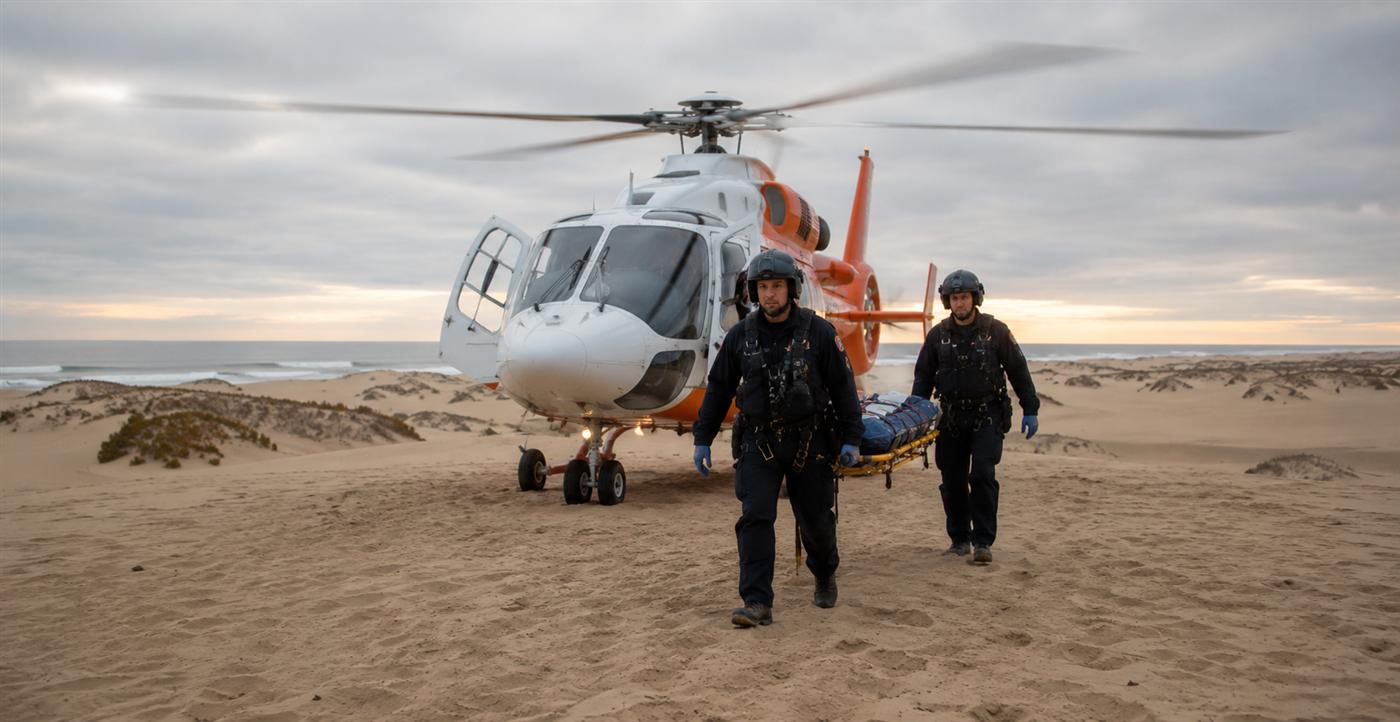
When Something Goes Wrong
Cell coverage gets thin on the sand. Know these three things before you need them.
Call 911 First
If you have signal, 911 is always the fastest route to help. Know roughly where you are; the nearest post number, camp name, or landmark from the map saves rescuers precious minutes.
CB Channel 9
For vehicle accidents or injuries, contact a ranger or radio ranger base on CB channel 9. It's monitored, and it works where cell phones don't.
The Call Box
An emergency solar-powered call box is located at the entrance to Sand Highway. Note it on your way in.
Emergency SOS via Satellite
If you're deep in the dunes with no cell bars and no CB response, an iPhone 14 or later can text emergency services directly off a satellite. Practice this before you need it. Apple has a demo mode that does not contact real emergency services, so run it in your driveway before your next trip.
- Update iOS to the latest version and set up Medical ID and emergency contacts in the Health app.
- Practice outside under open sky: swipe down for Control Center, tap Cellular, then tap Satellite, then Try Demo → Try Emergency SOS, and follow the on-screen arrows.
- In a real emergency, try 911 first. If it fails, tap Emergency Text via Satellite, or go to Control Center › Cellular › Satellite › Emergency SOS, then Report Emergency and answer the questions.
- Stay outside with a clear view of the sky, hold the phone normally, and follow the on-screen direction arrows until you connect.
Until Help Arrives
- Do not move an injured person unless he or she is in immediate danger. Sand riding injuries often involve the spine; wait for trained help.
- Send two people for help if you have them: one to high ground for cell signal, one toward the ranger station or call box.
- Mark the location. Flag down other riders; a circle of vehicles (at a safe distance) makes the scene visible to responders.
Where to Get Help
On major holiday weekends the ranger staff is supplemented by volunteer groups such as the Sheriff's Search and Rescue and the Equestrian Mounted Assistance Patrol, all prepared to offer help and information.
- Mobile ranger station: on most holiday weekends, a mobile ranger station is located at the Sand Highway entrance.
- Ranger info line: (805) 473-7220 (recorded).
- Stuck, not hurt? That's not an emergency. See the recovery steps and remember beach towing is available.
The Cavalry, When It's Needed
Help exists out here, but it takes time to reach you on sand. Recognize these resources, know where the call box is, and ride like the ambulance is 20 minutes away, because it is.
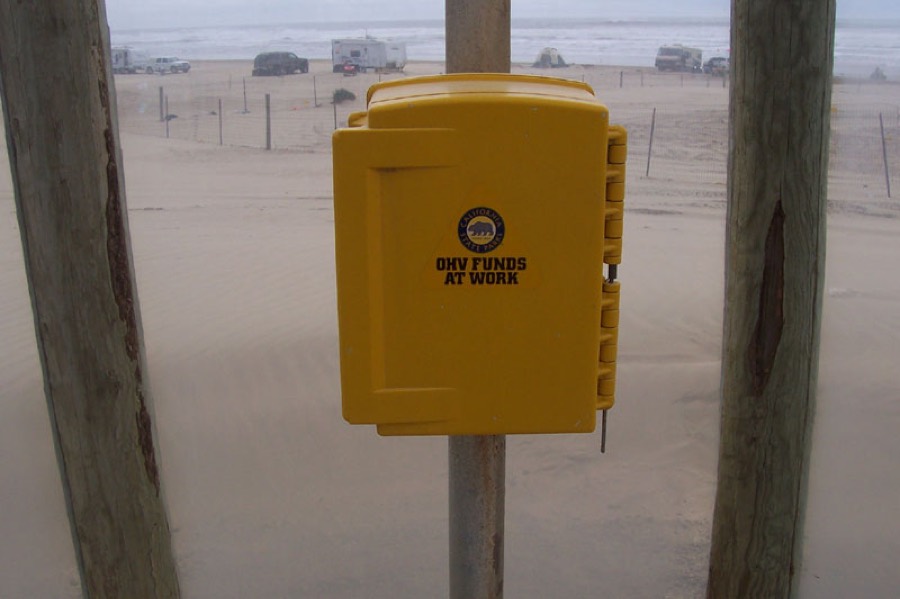
The Emergency Call Box
Solar-powered, at the entrance to Sand Highway by the Dunes Information Center. If you have no CB and no cell signal, this is your lifeline. Show it to everyone in your crew on the way in.
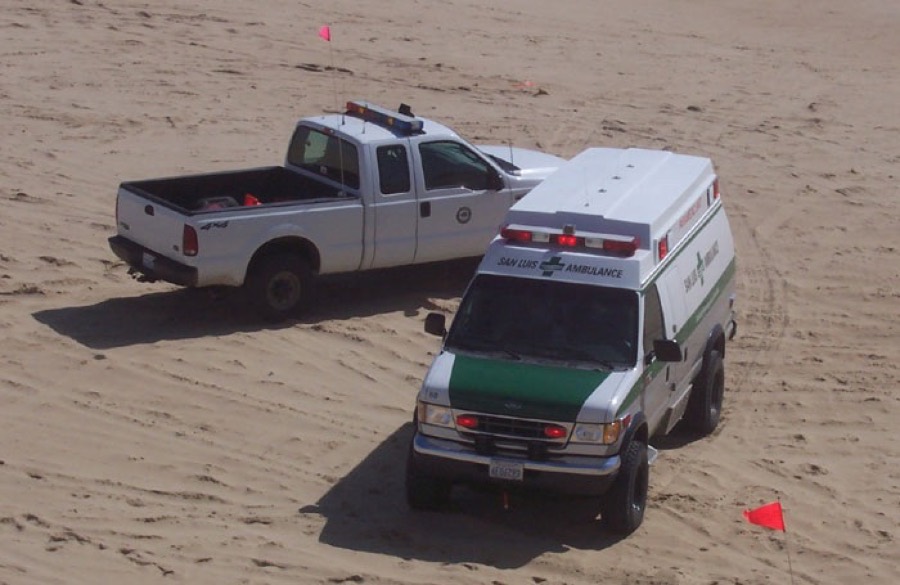
Beach Ambulance
San Luis Ambulance runs the sand with ranger units. Give responders room, keep bystanders clear, and never move an injured rider unless they are in immediate danger.
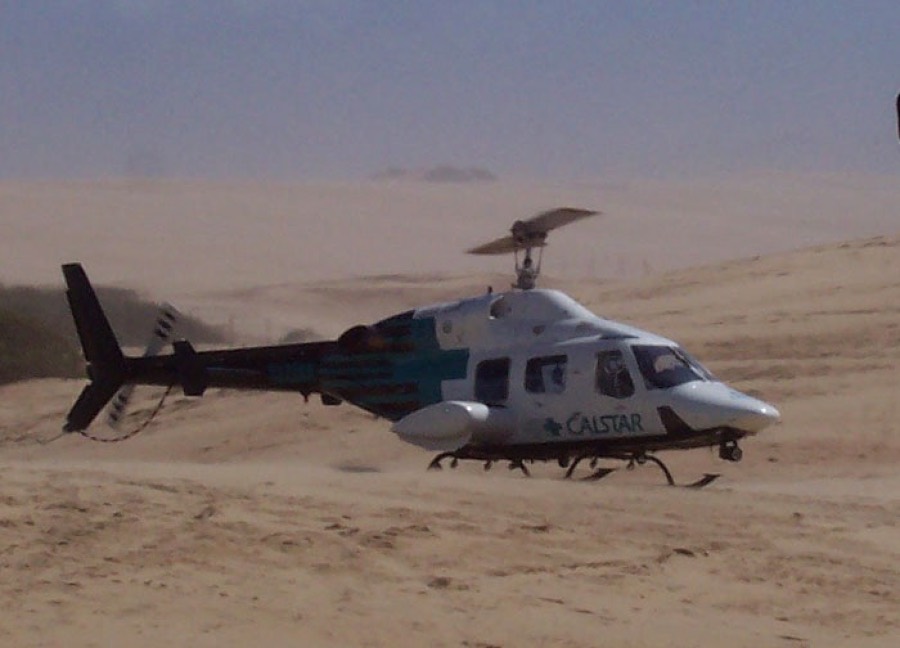
CALSTAR Medevac
Serious injuries get flown out. If a helicopter is landing, stay well back and stop riding in the area: rotor wash turns loose sand into a sandblaster.